
About Me
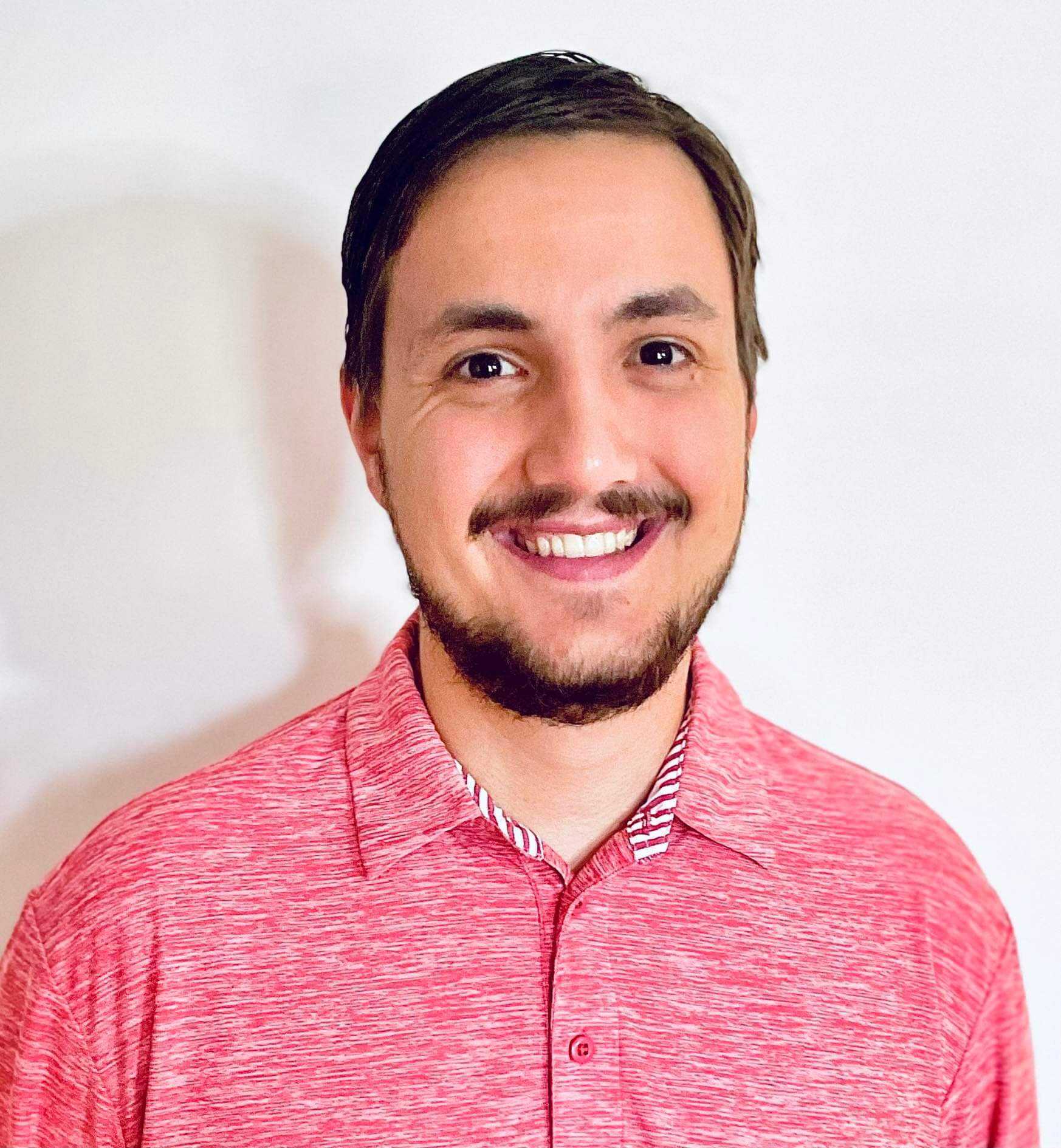
Dr. Gregory Curtin is a postdoctoral researcher at Ames National Laboratory and Iowa State University, working with Dr. Peng Xu. His research focuses on developing computational workflows to sample molecular conformations and evaluate binding motifs and energetics for critical mineral recovery from domestic sources.
Why I Like My Research
I am motivated to apply computational approaches to real-world challenges that impact the broader community. Our research aims to build fundamental understanding of complex physical, chemical, and biological systems. We collaborate with experimental chemists, biologists, data scientists, and other experts. Through these partnerships, I continually learn new concepts from different fields and integrate them into our work.
Success in My Group
Our group’s projects are inherently interdisciplinary, and I value that flexibility. Depending on a student’s interests and strengths, a project can lean more heavily toward chemistry, computer science, or a balance of both. Programming experience is not required to join the group. However, a basic working knowledge of Linux commands and comfort with a text editor will make day-to-day research much smoother and more productive.
Example Research Projects
Some of the research projects REU students can work on with me include:
Fragmentation Methods
Electronic structure calculations are expensive, especially for large biomolecular systems. Fragmentation methods address this by dividing a large system into smaller, chemically meaningful fragments that can be computed more efficiently and in parallel on modern supercomputing architectures. To achieve practical speedups, these methods rely on a series of physical approximations and, in some cases, empirically tuned parameters to balance accuracy with efficiency. A critical part of this work is systematically benchmarking and optimizing those parameters to ensure that the approximations remain reliable while still delivering meaningful computational savings. Additionally, automated fragmentation is necessary for studying large molecular systems. Manually defining each fragment is time consuming and increases the likelihood of errors, particularly as system size and complexity increase. Developing tools that automatically generate chemically meaningful fragments improves consistency, reduces human error, and makes large scale studies feasible. The broader workflow surrounding fragmentation methods should also be automated. This includes input preparation, job submission, data extraction, and output analysis. Establishing integrated pipelines enables high throughput processing while improving efficiency, reproducibility, and overall reliability in large computational campaigns.