
About Me
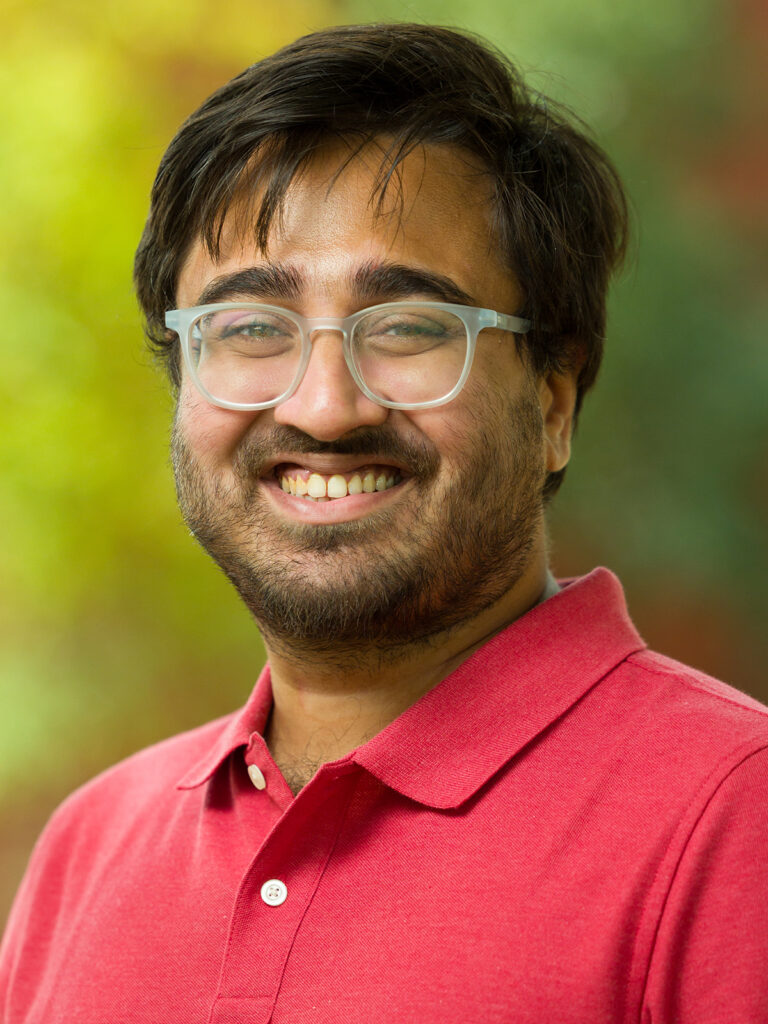
Dr. Ratul Chowdhury is a Building a World of Difference Faculty Fellow and Assistant Professor in Chemical and Biological Engineering and a contributor to Ames National Laboratory. The Chowdhury lab builds computational biomolecular engineering and machine learning tools to understand how proteins (building blocks of life) interact with other molecules such as metals.
Why I Like My Research
Computational biology lets me peer into atomic level details of protein in action – which cannot be done using modern microscopes. We use ideas from mathematics, computer vision, and neural networks to understand how biology works. I love mentoring students who are excited to learn about protein science. Being a mentor in SIMCODES is a fun avenue to meet a cohort of highly capable students. With each student I mentor not only do I get to visit the science through their lenses, but I also love to see them grow into critical thinkers.
Success in My Group
Success in my group is reflected in the journey one goes through in navigating the scientific problem and being able to describe what they understand in simple terms without using jargons. In SIMCODES, we focus on early career undergraduate students, mostly for whom this is the first foray into research. So, understanding the fundamentals of a project and connecting it with the big picture is the main goal.
Example Research Projects
Some of the research projects REU students can work on with me include:
Enzyme Activity Prediction
Enzymes are digestive molecules present in your stomach which helps you break down food. These could be imagined as molecular scissors. Depending on the shape of the scissor, it is destined to cut different molecules such as fats, carbohydrates, or proteins. However, an open challenge is how good is a given scissor for cutting a specific type of fat/ carbohydrate/ protein. Experimental data collection is slow, laborious, and expensive. We can learn from all enzymes characterized so far and get an estimate on how effective an unknown enzyme could be. This work includes aspects of machine learning, data mining, and understanding biochemical data of (a) the enzyme, and (b) substrate (i.e., the molecule that needs to be cut; fats/ carbohydrates/ proteins).