
Mentors: Ryan Richard
The input to most computational chemistry packages is Cartesian coordinates of a molecule (i.e., the location of each atom in three-dimensional space). For example the Cartesian coordinates of a water dimer are (units are Angstroms, i.e., one tenth of a nanometer):
H -1.958940 -0.032063  0.725554
H -0.607485  0.010955  0.056172
O -1.538963  0.004548 -0.117331
H  1.727607  0.762122 -0.351887
H  1.704312 -0.747744 -0.399151
O  1.430776 -0.003706  0.113495
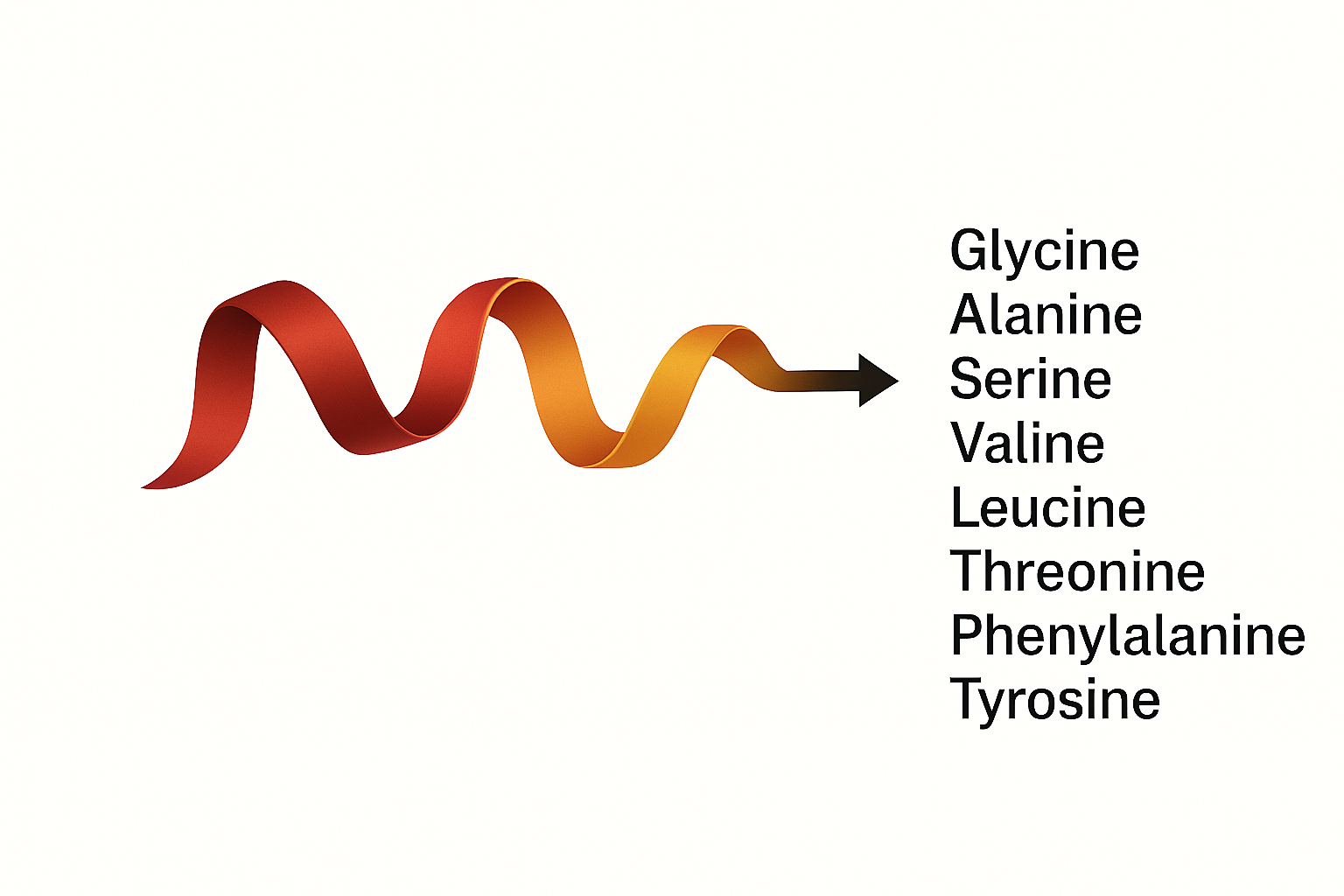
However, when we study proteins we typically are more interested in the primary sequence of the system, i.e., the names, and order, of the amino acids comprising the protein. By visualizing the protein, chemists can manually assign amino acid labels, but this is tedious and error-prone for large proteins (which often have hundreds to thousands of amino acids). Ideally we would like to have a program do this for us.
Given the connectivity of a protein (which atoms are bonded to which other atoms), identifying amino acids becomes what is called a “sub-graph search,” i.e., the problem becomes to determine whether the protein contains a set of atoms with a particular bonding arrangement. While we typically think of proteins as being comprised of 20 different amino acids, the reality is each amino acid can adopt multiple configurational isomers, significantly complicating the search.
This project seeks to develop a tool which is capable of reliably determining the primary structure of a protein.